Steam Vents

Table of Contents
Steam Vents
Yellowstone Steam Vents With Kids
Most families planning Yellowstone time their entire day around Old Faithful's next eruption. Meanwhile, some of the park's most dramatic thermal features sit there hissing and roaring with almost no one watching.
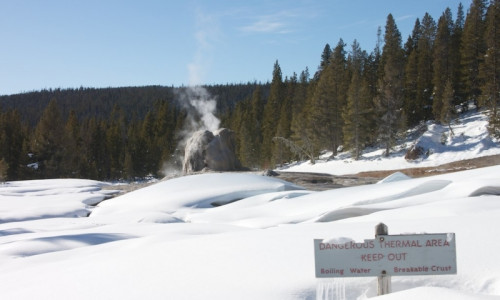
Steam vents (scientists call them fumaroles, but we're keeping it simple) happen when the supervolcano heat beneath Yellowstone is so intense that water never makes it to the surface as water. It flashes to steam before it sees daylight. The result? Plumes hitting 280°F, sounds you can hear from parking lots, and air that smells like rotten eggs.
Your kids will either love it or complain about the smell the entire time. Usually both.
I've been guiding families through Yellowstone's thermal areas for eight years. Steam vents deliver serious wow factor for minimal time investment. Most are right off major roads between bigger attractions. No 2-mile hikes required. The catch? They're hot enough to cause third-degree burns in under a second. Keep your kids on the boardwalks and you're fine.
What You Need to Know First
Norris Geyser Basin is your priority. It's the hottest, most dramatic thermal area in the park. If you only do one steam vent stop, make it Norris.
Steam vents run hotter than geysers. 199°F to 280°F versus 199°F to 220°F for geysers. At Yellowstone's elevation (roughly 7,733 feet), water boils around 199°F, which means these vents are consistently at or above boiling.
Early morning visits pay off. Better photos, smaller crowds, visible steam plumes. Cool air makes the steam show up dramatically. You'll actually find parking.
The sulfur smell is real. Think rotten eggs. Prepare your kids or they'll complain from the parking lot to the next attraction.
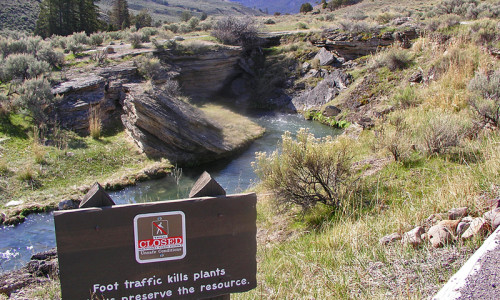
Boardwalk rules are non-negotiable. Ground collapses, water underneath burns. Third-degree burns in seconds. This isn't optional.
Download everything before you go. Cell service is nonexistent at all three locations. Maps, info, this article. Get it offline before you leave your lodging.
Which Ages, Which Stops
Ages 3-6: Roaring Mountain + Dragon's Mouth Spring
Roaring Mountain wins because it's a two-minute stop. Pull over, walk 50 feet, dramatic hillside view, back in the car before anyone melts down.
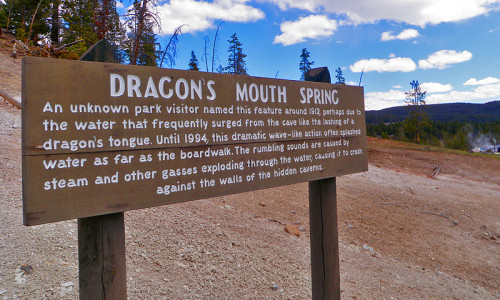
Dragon's Mouth Spring at Mud Volcano is your second choice. It sounds like a dragon roaring (kids love this), and the full loop is only 0.7 miles. Short enough for little legs.
Skip the full Norris loops. Too much walking, not enough payoff for this age. If you must do Norris, just walk to the first Porcelain Basin overlook (five minutes), take photos, done.
Parent survival tip: Hard candies or gum helps with the sulfur smell. Gives them something to focus on besides complaining.
Ages 7-12: All Three, Start With Norris
This age group gets the most out of steam vents. Old enough to grasp the supervolcano connection, young enough to think hissing vents are genuinely cool.
Do Norris Porcelain Basin first (most dramatic), then Mud Volcano if energy holds, Roaring Mountain as a quick drive-by.
Pair these stops with the Junior Ranger program. Thermal features count toward activity badges, which gives kids an educational hook beyond "look at the steam."
Pro move: Let them take photos with your phone. Kids this age love documenting weird nature stuff. It keeps them engaged longer than passive observation. Challenge them to capture steam against blue sky or find the most colorful mineral deposits.
Ages 13+: Norris for Geology, Mud Volcano for Photos
They'll roll their eyes at the suggestion, but they're secretly interested. Skip the "isn't this cool?" energy. Go with science: supervolcano facts, fault line intersections at Norris, earthquake-triggered changes.
Give them the camera and challenge them to get the best shot. Steam against sky, dramatic landscape compositions. Works better than you'd think.
Best bet for limited time: Norris has the most going on geologically and offers the most interesting photo opportunities. One stop only? Make it Norris.
Where to Actually Go
Norris Geyser Basin (Your Top Priority)
Norris earned its reputation as the hottest, most acidic thermal area in Yellowstone for good reason. It sits at the intersection of three major fault lines, making it the park's most seismically active zone. Small earthquakes here trigger what geologists call "thermal disturbances." Features you see can literally change week to week. Water levels shift, colors morph, vents that were quiet last month suddenly roar to life.
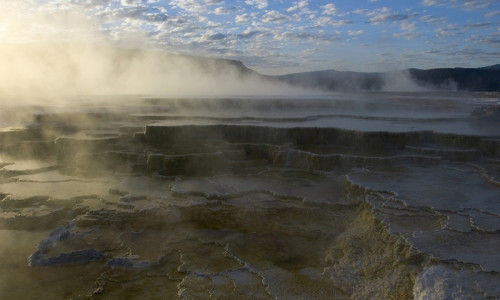
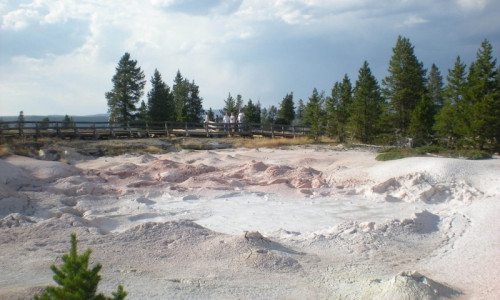
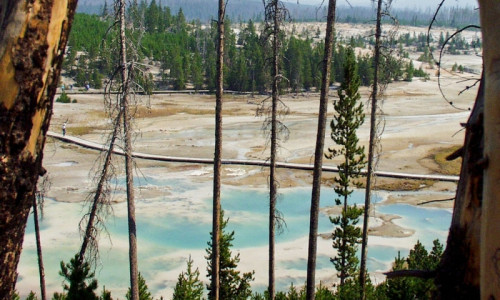
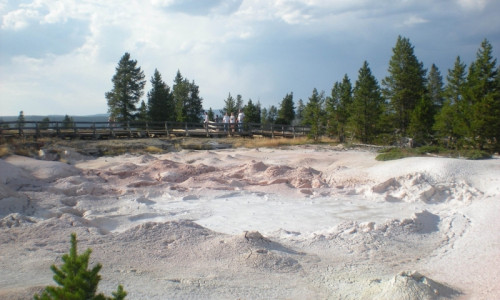
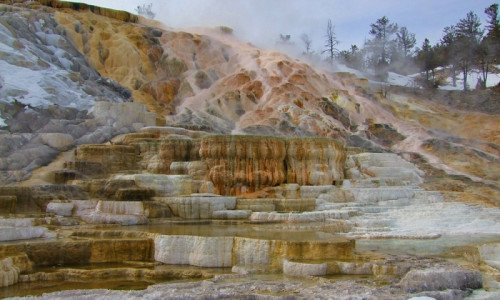
Start with Porcelain Basin. It's the most visually dramatic section. A chalky white expanse with no trees, just mineral deposits and steam rising from dozens of vents. The full boardwalk system is 2.3 miles, but if you've got younger kids or limited time, just do the Porcelain Basin section (about 0.7 miles, maybe 30-40 minutes with stops).
Black Growler Steam Vent is the star. Loud, aggressive, historically known for shifting locations after earthquakes. It's one of the hottest measured vents in the park. Last significant changes happened during the 2018 earthquake swarm when several vents changed their output patterns practically overnight.
Bathrooms: At the Norris Museum before you hit the trails. Use them. The Porcelain Basin loop has no facilities, and you don't want to explain to a desperate 6-year-old that we have to walk all the way back.
Parking reality: Main lot fills between 10 AM and noon during peak season (June-August). Get there by 9 AM or be prepared to circle. The east lot near the museum fills last. Head there if the main lot looks dicey.
Insider move: Hit Porcelain Basin first when you're fresh and kids are still engaged. Back Basin has geysers (including Steamboat, the world's tallest active geyser) but requires more walking and offers less wow-factor for quick thermal features stops.
More info: Norris Geyser Basin guide for trail maps and current conditions.
Roaring Mountain (Two-Minute Stop)
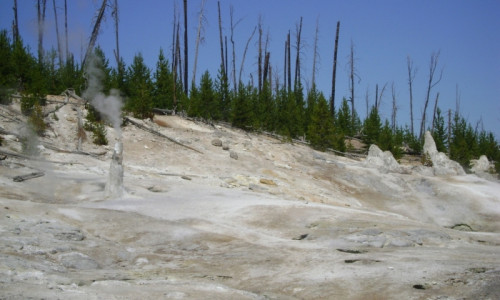
Despite the name, Roaring Mountain doesn't actually roar anymore. Back in the late 1800s, you could hear it from over a mile away. Then it quieted down. In 1902, it briefly roared again. So loudly people reported hearing it from significant distances, and the heat pulse killed trees across half a square mile before settling within a few years.
But here's what's interesting: Roaring Mountain still pumps out over 100 megawatts of geothermal power. It's one of the most thermally intense spots in the park, just quieter about it now. The hillside looks barren and chalky because acidic gases have turned the rock into soft clay over time.
I've stopped at Roaring Mountain probably 200 times. It's literally a two-minute pull-off between Mammoth and Norris. Still worth the stop. Not because it's roaring (it's not), but because it takes zero effort and the kids can say they saw the place that used to be loud enough to hear from a mile away.
The viewing area is right off the road. Pull over, walk 50 feet, you're there. Wheelchair accessible, takes maybe 10 minutes total. Perfect for when someone needs a stretch break and you want to check something off the list.
Parking: Small pull-off fills fast, especially mid-morning. If it's full when you arrive, there's another viewing spot 0.3 miles north. Fewer people stop there and the view is nearly identical.
Pro tip: Go early or late afternoon. Not just for parking, but because the sulfur smell intensifies as the day heats up. Mid-afternoon in July can be brutal.
Location context: Roaring Mountain sits along the Norris-Mammoth Corridor, a tectonically active zone that serves as a pathway for geothermal water heated by Yellowstone's magma system. For more on this area, visit the Mammoth Hot Springs page.
Mud Volcano Area (If You Have Time)
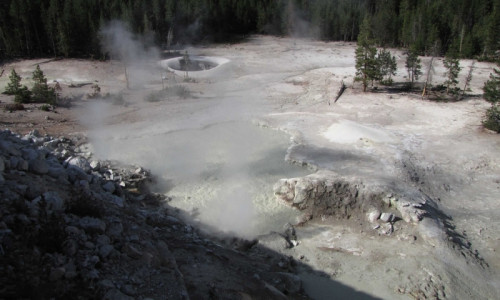
The Mud Volcano area combines steam vents with bubbling mud pots. The whole landscape feels vaguely prehistoric. The smell here is intense. If your kids are sensitive to strong odors, maybe save this for later in the trip when they're desensitized to sulfur.
Located within the Yellowstone Caldera, this area experiences significant ground uplift and subsidence. Scientists monitor it closely as an indicator of ongoing volcanic activity beneath the park.
Dragon's Mouth Spring is the showstopper. A cave-like spring where steam and water belch out rhythmically, creating a sound that genuinely does sound like a dragon roaring. Kids love it. We usually stop here first because it's the most memorable feature and sets the tone for the rest of the loop. Don't skip this one.
Sulphur Caldron is shockingly yellow and acidic. pH levels around 1.2, similar to battery acid. The bubbling surface looks like something from a sci-fi movie, and concentrated sulfur gives it that intense yellow coloration. This is one of the most acidic thermal features in the entire park.
The boardwalk loop runs about 0.7 miles with some slight elevation changes. We usually budget 45 minutes to an hour, which includes stopping to let kids make faces through the steam and take photos at Dragon's Mouth. Manageable with a stroller, though you'll work for it on the inclines.
Bathrooms: Available at the parking area, but they get backed up midday during peak season. If there's a line, you might actually be better off doing the loop first. Bathrooms at Fishing Bridge (6 miles south) are typically less crowded.
Parking: Decent-sized lot, but it fills by late morning in summer. Aim for before 10 AM if possible.
For more details on this unique basin, check out the Mud Volcano page.
Safety (The Part That Actually Matters)
Last July, I watched a dad let his 7-year-old run ahead on the Mud Volcano boardwalk. The kid was fine. Stayed on the boards. But the panic on that parent's face when he lost sight of him for 10 seconds? That's the reminder you need.
People die here. Not often, but it happens. In 2016, a 23-year-old man walked off the boardwalk at Norris to check the temperature of a hot spring. He broke through the thin crust. The water was 199°F or higher. He didn't survive.
Stay on the boardwalks. Period.
Not kind of on them. Fully on them. The ground around thermal features is often a thin crust over boiling water or mud. It collapses. The water underneath causes third-degree burns instantly. Some pools are acidic enough to burn through boot leather.
With kids, this isn't a suggestion. It's the rule you enforce harder than "don't run with scissors." Keep them within arm's reach in thermal areas, especially if they're under 10. The combination of excitement, sulfur smell, and steam can make kids woozy or distracted. That's when accidents happen.
Don't let anyone stick hands in the water or even runoff streams.
Even small streams running away from thermal features can be scalding hot. If you see steam rising, assume it's too hot to touch. The water in these features reaches temperatures up to 280°F, well above boiling.
Pets aren't allowed on thermal area trails.
Dogs have died jumping into hot springs thinking they were regular ponds. They don't instinctively recognize the difference between hot and cold water. Leave pets at your campsite or vehicle.
If anyone feels dizzy, nauseous, or lightheaded, leave immediately.
Some thermal areas emit toxic gases (hydrogen sulfide, carbon dioxide) that can build up in poorly ventilated spots, especially on calm days. Symptoms usually pass quickly once you're away from the concentration. Don't push through it. Get to fresh air.
Watch for wildlife near thermal features.
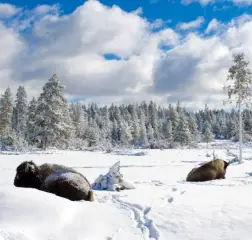
In winter, bison congregate around steam vents for warmth. They're massive, unpredictable, and occasionally miscalculate. Park regulations require staying 25 yards away. They're not interested in your photos, and they absolutely will charge if they feel crowded.
What This Actually Costs
Your National Park entrance fee (currently $35 per vehicle for 7 days) covers all steam vent access. No additional fees for any of these areas.
Where money sneaks up:
- Gas between sites (you'll burn through a quarter tank doing all three)
- Snacks/drinks if you didn't pack them (visitor center vending machines run $3-4 per item)
- Coffee at Norris Museum (surprisingly decent, about $3)
Total out-of-pocket beyond your park pass: basically zero if you pack water and snacks. This is genuinely one of the better value stops in the park. Maximum impact, minimal cost.

Drive Times & Logistics
Between sites:
- Norris to Roaring Mountain: 11 miles (about 15 minutes)
- Roaring Mountain to Mud Volcano: 28 miles (about 40 minutes)
- Full loop if you're doing all three: budget 3-4 hours including actual stops and drive time
That's assuming normal traffic. During peak season (July-August), add 15-30 minutes for wildlife jams. Bison don't care about your schedule.
Food situation:
There's nothing at any of these sites except vending machines at Norris Museum. Pack snacks, pack lunch, pack more snacks than you think you need. The nearest restaurants are in Canyon Village (20 miles from Mud Volcano) or Mammoth (11 miles from Roaring Mountain). You're not going to want to drive that far when everyone's hungry at 11:30 AM.
Cell service:
Basically nonexistent. Don't count on GPS, don't count on looking up information, don't count on posting to Instagram in real-time. Download what you need beforehand.
What to Pack
- Layered clothing (mornings can be 30-40 degrees cooler than afternoons)
- Sturdy walking shoes with tread (boardwalks get slippery)
- Daypack with water bottles (more than you think you need)
- Snacks (hangry kids make everyone miserable)
- Camera or phone with full battery
- Binoculars for wildlife viewing
- Basic first-aid kit
- Small towel or bandana (can be dampened for cooling down or used over nose for sulfur smell)
For comprehensive packing advice and general trip planning, explore the Yellowstone Travel Info page and check current weather conditions before you leave.
Local Intel That Makes the Difference
After eight years of guiding families through these areas:
Parking strategy:
- Norris: East lot (near museum) fills last. Park there if main lot is full.
- Roaring Mountain: If the main pull-off is full, drive 0.3 miles north. Second viewing spot, fewer people.
- Mud Volcano: Lot fills by 10:30 AM in peak season. Get there earlier or wait until after 3 PM when tour buses have moved on.
Sulfur smell management:
- Hard candies, gum, or a small dab of vapor rub under the nose helps kids tolerate the smell.
- Morning visits typically mean less intense odor. Heat intensifies everything by afternoon.
- If someone's genuinely struggling, don't push it. Mud Volcano in particular can be overwhelming for sensitive noses.
Best photo timing:
- Early morning (before 9 AM) or late afternoon for visible steam plumes. Cool air creates better contrast.
- Overcast days actually work better than bright sun for capturing steam without blown-out highlights.
- Back Basin at Norris catches afternoon light beautifully, but Porcelain Basin is better in morning light.
Weather reality check:
- Mornings in June can be 40°F even when afternoons hit 70°F. I've seen July snow at these elevations.
- Layers aren't optional. Fleece or light puffy jacket in the morning, shorts by afternoon.
- Boardwalks get slippery when wet. Closed-toe shoes with actual tread, not flip-flops.
Why This Stuff Actually Matters
Yellowstone sits on top of a supervolcano. A massive chamber of magma sits roughly 3 to 7 miles underground. That magma heats water in the porous rock above it to temperatures exceeding 400°F under pressure. When that superheated water finds a pathway to the surface but doesn't have enough volume to form a pool or geyser, it flashes to steam the moment it hits lower pressure near the surface.
The fault lines running through areas like Norris act as plumbing for this system. You see concentrated thermal activity along those zones. The area experiences over 1,000 small earthquakes each year, with larger swarms occasionally triggering visible changes in thermal features.
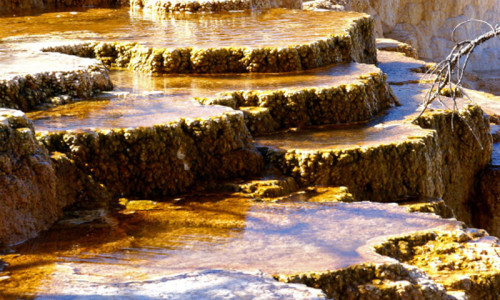
Dragon's Mouth Spring roaring? That's pressure release from underground. The chalky white deposits at Porcelain Basin? Dissolved minerals crystallizing as water evaporates. The sulfur smell? Gases from deep underground (hydrogen sulfide, carbon dioxide, others) making their way to the surface through cracks in the rock.
Your kids are literally watching the Earth's internal processes in real time. That's the educational value here. Not abstract science, but tangible, loud, smelly evidence of geological processes happening now.
Quick Answers to What Parents Ask Most
Can we touch anything?
No. Water hot enough to cause third-degree burns in less than a second is sitting right there. Some pools are acidic enough to dissolve leather. Look, photograph, keep hands in pockets.
Why do steam vents smell like rotten eggs?
The smell is hydrogen sulfide gas, a natural byproduct of geothermal processes occurring deep underground. It's one of several gases (along with carbon dioxide and others) being released through these vents. The smell is strongest at Mud Volcano, less intense at Norris, and variable at Roaring Mountain depending on wind direction.
Are thermal areas accessible for strollers/wheelchairs?
Most boardwalks are accessible. Roaring Mountain's viewing area is fully wheelchair accessible. Norris and Mud Volcano have accessible sections, though some elevation changes make strollers a workout. Check specific trail conditions at visitor centers before your visit.
Are these going to look different if we come back next year?
Maybe. Yellowstone's thermal features change constantly. Earthquakes, mineral deposits, and water level fluctuations can all shift what you see. The 2018 earthquake swarm at Norris changed several features noticeably. That's part of what makes it interesting. You're seeing a snapshot of an ongoing geological process.
What's the difference between a steam vent, hot spring, and geyser?
All are hydrothermal features powered by the same heat source, but they differ in water supply and plumbing:
- Steam vents (fumaroles): Hottest type, very little water that instantly flashes to steam before reaching the surface. The driest, hottest features.
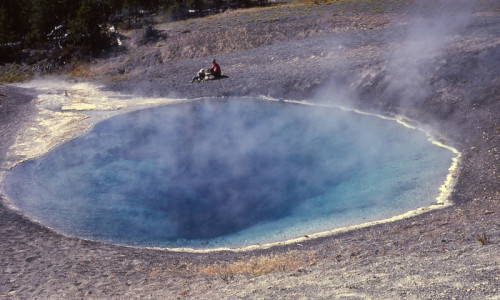
- Hot springs: Pools of hot water with open plumbing that allows continuous circulation, preventing pressure buildup. Most common thermal feature in the park.
- Geysers: Hot springs with constricted plumbing that allows pressure to build, leading to periodic eruptions of hot water and steam. Relatively rare. Yellowstone has about half the world's geysers (roughly 500 of about 1,000 worldwide).
How long should we budget for these stops?
- Roaring Mountain: 10-15 minutes
- Norris Porcelain Basin: 45 minutes to 1 hour
- Mud Volcano loop: 45 minutes to 1 hour
- All three in sequence: 3-4 hours including drive time
Can we swim in any thermal features?
Absolutely not in these areas. The water is scalding hot (up to 280°F) and often extremely acidic. Swimming or bathing in thermal features is prohibited and dangerous.
Are Steam Vents Worth Your Time?
If you've got limited days in Yellowstone and you're trying to prioritize: steam vents aren't the main event, but they're absolutely worth building into your itinerary if you're already driving between major attractions.
Roaring Mountain takes 10 minutes and it's literally on the road between Mammoth and Norris. No reason not to stop. Norris Porcelain Basin offers the most dramatic thermal landscape in the park and deserves 45 minutes of your time. Mud Volcano is worth it if you're heading to or from the Grand Canyon of Yellowstone and you want something different than hot springs and geysers.
All three together? You're looking at a half-day commitment that delivers geology education, dramatic photo opportunities, and stories your kids will actually remember. The Earth is literally hissing at you. That's not something you see every day.
Just keep them on the boardwalks, pack snacks, and prepare for the sulfur smell. The rest takes care of itself.
For more Yellowstone planning:
- Yellowstone Travel Info & Packing Guide
- Current Weather Conditions
- Junior Ranger Programs
- Activities & Things to Do
- Trail Information