Paddling Yellowstone and Grand Teton: A Family Guide

Table of Contents
Start Your Planning With These Local Businesses
Local Businesses






Paddling Yellowstone and Grand Teton: The Family Guide to Kayaking, Canoeing and SUPs
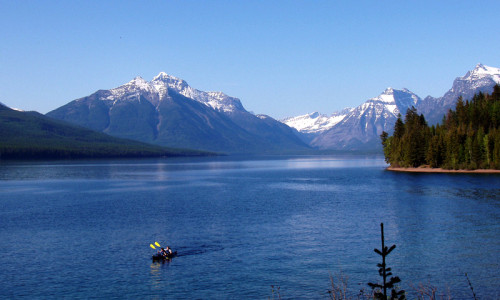
There's something about gliding across a high-alpine lake at sunrise that makes the 4 a.m. alarm feel worth it. The water's glassy. The Tetons are reflected so perfectly you can't tell where the mountains end and the lake begins. And your kids, for once, are actually quiet, watching for moose along the shoreline instead of asking when we're stopping for snacks.
We've spent years paddling these waters. Both as locals who sneak out for evening paddles after work and as the people fielding panicked calls from visitors who showed up with their kayak only to get turned away at the boat ramp. Here's the thing: paddling in Yellowstone and Grand Teton is absolutely worth the effort, but the learning curve is steep if you don't know what you're walking into.
Two national parks means two sets of rules. There are mandatory inspections, permits that don't transfer between parks, and water cold enough to put you in hypothermia in under 10 minutes. Miss one step and your paddling trip is over before it starts.
This guide cuts through all of it. We'll tell you exactly where to go with a 5-year-old versus a teenager, which permit you actually need, and why a guided tour might save your vacation. Let's get you on the water.
Key Takeaways
- No rentals exist inside Yellowstone National Park. You must bring your own gear or rent from gateway towns like Jackson or West Yellowstone.
- String Lake in Grand Teton is the family paddling sweet spot. Shallow, warmer water, wind-protected, perfect for kids ages 3 and up.
- Every watercraft requires an AIS inspection before launch in both parks. Arrive with everything clean, drained, and completely dry or you won't launch.
- Morning paddles are non-negotiable on big lakes. Afternoon winds on Yellowstone Lake regularly create 5-6 foot waves that are dangerous for kayaks.
- Cold water is the biggest safety risk. Yellowstone Lake averages 41°F even in August. Everyone needs a life jacket, not just kids.
- A Yellowstone permit doesn't work in Grand Teton. Plan to get inspected and permitted separately if paddling both parks.
Planning Your Paddling Trip: The Not-Fun Part You Can't Skip
Let's get the permits, inspections, and rules sorted first. Not exciting. But spending 20 minutes understanding this now saves you from turning around at the boat ramp after driving 5 hours with a van full of kids.
The AIS Inspection: Why Every Single Boat Gets Stopped
Before your boat touches water anywhere in these parks, it goes through an Aquatic Invasive Species inspection. Period.
This includes your inflatable paddleboard, your kid's pool floaty (which isn't allowed anyway, but people try), and yes, that kayak you just paddled on a lake in Montana yesterday.
The parks are protecting these waters from invasive species like zebra mussels and New Zealand mudsnails. Once those things establish, they're nearly impossible to remove. Yellowstone already has eight documented invasive species, which is exactly why rangers don't mess around with this.
Your boat needs to be Clean, Drain, Dry, and they mean bone dry. Visible mud anywhere? Failed. Standing water in a hatch? Failed. Wet life jacket straps? You're risking it. Rangers will inspect every compartment, every strap, every piece of gear. The folks who fail the inspection most often are the ones who figured they could rinse their boat in the hotel parking lot that morning.
That's not dry enough.
Yellowstone's Rules:
All watercraft need a Yellowstone boat permit after passing inspection. The good news for kayakers and canoers: you're exempt from the 30-day dry time rule that applies to motorboats with ballast tanks. You still need to be clean and dry, you just don't need to prove your boat's been sitting in a garage for a month.
Get inspected and permitted at Grant Village Backcountry Office, Bridge Bay Marina, or Lewis Lake Ranger Station. They're open daily, typically 8 a.m. to 4:30 p.m. from Memorial Day through October.
Grand Teton's Rules:
Same inspection requirement, different permit system. Here's where it gets confusing: most boats need a Wyoming state AIS decal on top of the park permit. But there's a useful exemption. Non-motorized inflatable boats under 10 feet and all paddleboards (inflatable or solid) don't need the state decal.
You still have to stop for inspection. You just don't pay the extra state fee.
Inspection stations are in Moose (by the post office) and Moran (north of the entrance station), open 7:30 a.m. to 4:30 p.m. mid-May through mid-September.
The Two-Park Problem Nobody Warns You About
A Yellowstone permit is not valid in Grand Teton. A Grand Teton permit is not valid in Yellowstone.
So if you paddle Yellowstone Lake on Monday and want to hit String Lake on Tuesday, you need to go through the entire inspection and permitting process again at a Grand Teton station before you launch. Your boat gets inspected again, you pay for another permit, the whole thing.
This is why most families who want to paddle both parks either hire guides in each location or rent locally instead of hauling their own boats around.
Permits and Fees: What You'll Actually Pay
| What You Need | Yellowstone | Grand Teton |
|---|---|---|
| Park Entry | $35/vehicle (7 days) | Your Yellowstone pass works here |
| Boat Permit | $20 (7 days) or $30 (season) | $25 (season) |
| Where to Buy | At inspection stations | Online at Recreation.gov or visitor centers |
| State AIS Decal | Not required | Required for most boats; SUPs and small inflatables exempt |
| PFD Law for Kids | Required age 12 and under | Required under age 13 |
The permits are per boat, not per person. Bringing two kayaks? You need two permits.
Safety on Cold Water: What Keeps Rangers Up at Night
The water here is beautiful and it will kill you faster than you think. That's not meant to scare you off. It's meant to make sure you come prepared.
The Cold Water Reality
Yellowstone Lake averages 41°F. In August. At the height of summer.
Jackson Lake runs slightly warmer but still stays below 60°F. These temperatures cause cold shock response the second you hit the water. Your body gasps involuntarily, you can't control your breathing, and you've got maybe 10-15 minutes before hypothermia shuts you down.
This is not the lake where you swim to cool off.
Life jackets aren't optional.
Yes, the law only requires them for kids under 12 or 13 depending on which park you're in. But here's the local advice that guides repeat on every single tour: everyone wears one, all the time, no exceptions. In water this cold, if you capsize, you won't have the dexterity or time to grab a PFD from under your seat and put it on. You need it already on your body.
Wind and Weather: Why Morning Paddles Are Non-Negotiable
The big lakes (Yellowstone Lake and Jackson Lake) are calm and glassy most mornings. By noon, especially on Yellowstone Lake, winds regularly whip up 5-6 foot waves. In a kayak, that's legitimately dangerous.
Every single guided outfitter schedules tours for early morning or late evening. That's not because they like waking up at 4 a.m. It's because afternoon conditions can turn deadly fast. Thunderstorms roll in with almost no warning. Lightning on a big open lake in a kayak is exactly as bad as it sounds.
Plan to be off the water by early afternoon. If you see dark clouds building, you're already too late. Get to shore immediately.

Wildlife: You're Paddling Through Their Living Room
One of the best parts of paddling is how close you can get to wildlife. Moose wading in the shallows. Elk herds coming down to drink. Maybe a black bear ambling along the shore (grizzlies too, though they're less common near the water).
Federal law requires you stay 100 yards from bears and wolves, 25 yards from everything else. In a kayak, that distance closes fast if an animal moves toward you. Don't paddle closer for a better photo. If a moose is in the water where you want to go, you wait or you paddle a different direction.
Yellowstone Paddling: Geysers, Backcountry Lakes, and No Rentals
If you only paddle one place in Yellowstone, this is it.
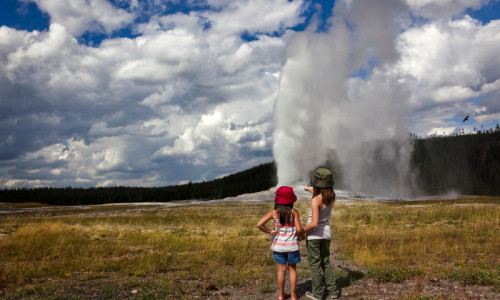
You're kayaking over the collapsed caldera of one of the world's largest super-volcanoes, past underwater hot springs and geysers you can actually see bubbling through the crystal-clear (freezing) water.
The trip launches from Grant Village and hugs the shoreline of West Thumb, passing the West Thumb Geyser Basin. From the water, you see the steam vents and colorful thermal features from an angle that's impossible from the boardwalk. Guides point out Potts Geyser Basin, a collection of geothermal features only accessible by boat.
The paddle is 5-6 miles round trip and takes 3-5 hours depending on the tour. Most outfitters set a minimum age of 12-14 for this trip given the cold water and distance. Some will take kids as young as 7 in a tandem kayak with a strong adult paddler, but you need to call and ask.
This is the trip where hiring a guide makes the most sense. They handle all the gear and permits, they know how to read the weather, and they carry sat phones for emergencies. More importantly, they'll explain what you're actually looking at: the geology, the thermal features, the history. On your own, it's pretty. With a guide, it's mind-blowing.
Lewis River Channel to Shoshone Lake: The Backcountry Grind
This is not a relaxing float.
This is a 9-mile round trip where you'll paddle, wade, and drag your kayak upstream through a shallow, rocky "river" that's more like an obstacle course. It's also the only river paddling allowed in Yellowstone, and the payoff is access to Shoshone Lake. The largest backcountry lake in the lower 48, totally motor-free.
You launch at Lewis Lake and work your way up the channel. Expect to get out multiple times to pull your boat over rocks and through sections too shallow to paddle. Sturdy water shoes are essential (not flip-flops, which will be gone by mile 2). Trekking poles help with balance in the current.
This trip is for strong, experienced paddlers or very fit families with teenagers who are up for the challenge. Not recommended for kids under 12 or anyone who wants a mellow day.
Pack food, lots of water, and extra layers. It's an all-day commitment. And whatever you do, don't try to shortcut across the open water of Lewis Lake to reach the channel entrance. Hug the shoreline. Storms come out of nowhere.
Guided Tours in Yellowstone: Who to Book
Most visitors will have a better, safer experience with a guide. You're not just paying for a boat. You're paying for someone who knows when to get off the water, how to handle a rescue, and what that bubbling vent actually is.
Our top recommendations:
- Shurr Adventures: Family-owned, tiny group sizes (often just your family), great with kids. They'll take children as young as 7 in tandems. Morning and sunset tours. Around $120-145/person.
- Yellowstone Hiking Guides: Their guides are certified naturalists, so you get the deepest educational experience. Best for families who want to learn, not just paddle. Ages 14+, $127/person for 4-hour morning trips.
All tours include gear, permits, guides with wilderness first aid certification, and usually a snack or meal.
The Rental Problem in Yellowstone
There are no kayak, canoe, or SUP rentals inside Yellowstone National Park. None. Zero.
You can rent 18' motorboats at Bridge Bay Marina, but that's it. If you want to paddle, you either bring your own boat (and deal with inspections and permits yourself), or you rent from a gateway town and drive it in.
Closest rental options:
- West Yellowstone: Kirkwood Marina or Madison Arm Resort rent kayaks and SUPs for use on Hebgen Lake, just outside the park
- Jackson (90 minutes south): SUPerior Paddlesports delivers inflatable kayaks and SUPs directly to your hotel, includes the Grand Teton permit
- Gardiner (north entrance): Paradise Adventure Company for 1/2 or full-day inflatable kayak trips, but they focus on whitewater trips on the Yellowstone River (ages 13+, very different experience)
Grand Teton Paddling: The Family-Friendly Alternative
Grand Teton is where families with younger kids should spend their paddling time. The lakes are more accessible, the water's slightly warmer (slightly), and there are actual rental options inside the park.
String Lake: The Hands-Down Best Family Paddle
Ask any Jackson local where to take kids paddling and they'll tell you String Lake without hesitation.
It's shallow, wind-protected, and the water is noticeably warmer than the big glacial lakes (still cold, but not hypothermia-in-minutes cold). It's the most popular swimming spot in the park on hot days.
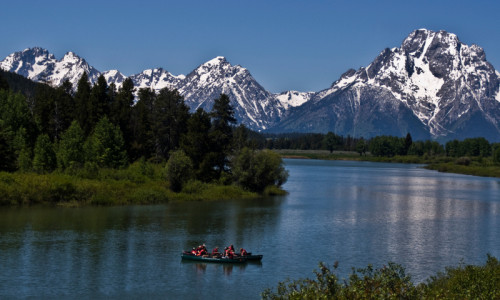
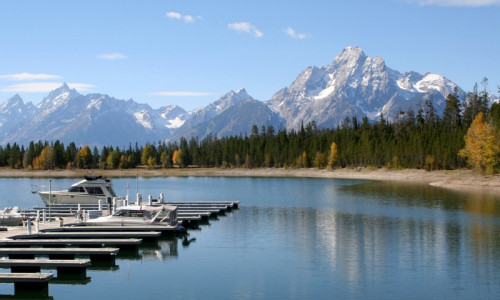
The lake is narrow and surrounded by forest, which keeps the wind down. Little kids can paddle without fighting the elements. The views of the Cathedral Group (those iconic jagged Teton peaks) reflected in the calm water are postcard perfect.
You can pull right up on sandy beaches for picnics. The kids can actually swim here without you panicking about cold shock. It's as close to a "perfect family paddle day" as you're going to find in this ecosystem.
The Leigh Lake Portage: At the north end of String Lake, a short (150 yards), well-marked trail lets you carry your boat into Leigh Lake. Suddenly you're on a much bigger, wilder lake with way fewer people. It's a nice option for families with older kids who want more adventure after paddling String Lake.
Early morning is when you'll spot wildlife. Moose and elk along the western shore are common.
Colter Bay on Jackson Lake: Convenience and Big Views
Colter Bay Village is Grand Teton's "family base camp." It's a full-service area on Jackson Lake's shore with lodging, camping, restaurants, and most importantly, a marina that rents kayaks and canoes right on the water.
You can rent single or double kayaks, canoes, even small motorboats by the hour (two-hour minimum). Kids need to be old enough to fit in an infant PFD, usually around 12 months. This is the easiest option if you don't want to haul gear or deal with rentals from town.
The paddling here is all about the scale. You're on a massive lake with Mount Moran rising straight up across the water. You can explore islands and inlets all day. Wildlife viewing is excellent. Moose, elk, bears on shore, bald eagles and osprey overhead, beavers and otters around the islands.
The tradeoff is that Jackson Lake gets windy. Same rules apply: early morning paddles, off the water by early afternoon.
Snake River Scenic Float: Flatwater, Not Whitewater
The Snake River is famous for whitewater rafting, but inside Grand Teton, there's a mellow scenic float section from Jackson Lake Dam to Pacific Creek. Gentle current, unbelievable Teton views, excellent wildlife spotting.
Only human-powered boats allowed. Rafts, canoes, kayaks, drift boats. No motors. Also no inner tubes or pool toys, which people try to bring constantly.
Different sections of the Snake have different rules and managers. The calm float inside the park is managed by the Park Service. The whitewater sections south of the park are managed by Bridger-Teton National Forest and have different fees and permits. Know which section you're on.
Rentals and Outfitters: Your Local Options
Inside Grand Teton National Park
- Colter Bay Marina is the only on-water rental inside either park. Kayaks, canoes, small motorboats. Open seasonally, usually late May through September. Reservations recommended in peak summer.
- Dornan's Adventure Sports in Moose (south entrance to GTNP) rents paddleboards, canoes and kayaks. It's the most convenient spot if you're paddling String or Jenny Lakes.
Jackson Area (Near Grand Teton)
- Leisure Sports is one of Jackson's most diverse outdoor rental business, offering water sports items, vehicles, snowmobiles and camping-related gear.
- SUPerior Paddlesports delivers high-quality inflatable SUPs and kayaks directly to your hotel or rental house in Jackson Hole. Their packages include pumps, paddles, PFDs, roof racks, and the Grand Teton permit sticker. Huge convenience factor for families.
- Rent-A-Raft specializes in rafts and inflatable kayaks for Snake River floats. They'll outfit you with everything you need and shuttle you to the put-in.
West Yellowstone and Gardiner
- Kirkwood Marina and Madison Arm Resort near West Yellowstone rent kayaks, SUPs, and fishing boats for Hebgen Lake.
- Paradise Adventure Company in Gardiner offers guided inflatable kayak trips on the Yellowstone River. This is whitewater, minimum age 13, very different from the calm lake paddling elsewhere.
Curious? FAQ & More Information
1. Can I rent a kayak inside Yellowstone?
No. This is the most common misconception visitors have. There are no kayak, canoe, or SUP rentals inside Yellowstone National Park. You can rent motorboats at Bridge Bay Marina, but that's it. Rent from Jackson, West Yellowstone, or Gardiner and bring it in yourself.
5. Do I really need to get inspected again if I paddle both parks?
Yes. A Yellowstone permit and inspection don't transfer to Grand Teton, and vice versa. If you paddle both parks, you go through the full inspection and permitting process twice. This is why many visitors hire guides or rent locally in each location instead of hauling their own boat between parks.
2. How cold is the water really?
Yellowstone Lake averages 41°F even in August. Jackson Lake runs below 60°F. Cold enough for hypothermia to set in within 10-15 minutes of immersion. This is why life jackets aren't optional and why you don't swim.
6. What happens if my boat fails the AIS inspection?
You don't launch. Park rangers will deny you a permit if your boat isn't clean, drained, and dry. The most common failures are visible mud, standing water in compartments, or wet gear. You can't talk your way past this. They're extremely serious about preventing invasive species.
4. When should I be on the water?
Early morning. Sunrise to noon is the calm window. Afternoon winds on the big lakes regularly create dangerous conditions with 5-6 foot waves. Plan to be off the water by early afternoon.
3. Where can I paddle with young kids (under 8)?
String Lake in Grand Teton. It's shallow, warmer than the big lakes, wind-protected, and has sandy beaches. It's the only place we'd recommend for kids under 8. Colter Bay on Jackson Lake works for older kids (8+) who are strong swimmers.