Hunting / Outfitters

Table of Contents
Start Your Planning With These Local Businesses
Local Businesses



Hunting Near Yellowstone: Your Complete Guide to the Greater Yellowstone Ecosystem
You cannot hunt inside Yellowstone National Park. Full stop. The park is a wildlife sanctuary where animals live unbothered by hunters. But step across the boundary and everything changes.
The national forests ringing Yellowstone in Montana, Wyoming, and Idaho offer some of the most challenging big game hunting anywhere in North America. Elk that spend summers grazing in the park's high meadows migrate down when winter hits, crossing into huntable lands. Bison that grow up protected inside eventually wander across invisible lines into areas where regulated hunting helps manage the herd.
This isn't something you plan over a long weekend. Hunting the Greater Yellowstone Ecosystem means navigating three state regulatory systems, drawing tags months (sometimes years) in advance, training your body for high-altitude terrain, and accepting that you're hunting in grizzly country. For families willing to put in the work? It can be one of the most meaningful outdoor experiences you'll ever share together.
Key Takeaways
- Hunting inside Yellowstone is illegal. All hunting happens on surrounding national forest lands and private property in Montana, Wyoming, and Idaho.
- Start planning 6 to 12 months ahead. Application deadlines begin in January. Seasons run September through November.
- Wyoming requires guides for non-residents in designated Wilderness Areas (where most prime elk habitat sits).
- DIY public land elk hunting success rates hover around 10 to 15% for non-residents. First-timers often see lower odds.
- Quality guided hunts run $7,000 to $15,000 or more. DIY trips cost $3,000 to $5,000 when you factor in tags, travel, and gear.
- Physical preparation is non-negotiable. You're looking at 7,000 to 10,000+ feet elevation, steep terrain, and multi-mile daily hikes with heavy packs.
- Bear safety isn't optional. Carry bear spray, know food storage rules, and understand you're in the highest-density grizzly habitat in the lower 48.
Is a GYE Hunt Right for Your Family?
Before diving into logistics, let's figure out if this trip makes sense for your crew right now. Answer honestly.
Physical readiness:
- Can everyone in your hunting party hike 3 to 5 miles on steep terrain at 8,000+ feet elevation?
- Are you willing to train for 3 to 6 months before the trip?
- Can your family handle early mornings (pre-dawn departures) for 5 to 7 consecutive days?
Experience level:
- Has at least one adult in your group completed a western big game hunt before?
- Are your kids comfortable with firearms safety and have they completed hunter education?
- Does your family have experience camping in remote areas without cell service?
Budget reality:
- Can you commit $7,000 to $15,000 for a quality guided family hunt?
- Or $3,000 to $5,000 for DIY (with realistic expectations about lower success rates)?
- Can you afford this trip even if nobody fills a tag?
Timeline:
- Can you start planning 12 to 18 months ahead for guided hunts?
- Are you able to navigate application deadlines starting in January?
Quick Assessment
If you answered "yes" to most questions: You're ready to start planning. Keep reading.
If you're unsure about physical readiness: Consider a lodge-based guided hunt where daily exertion is more manageable. Or spend a year building fitness before committing.
If budget is tight: A DIY hunt is possible but success rates drop significantly. Make sure the experience itself (not the harvest) is worth the investment.
If this is your family's first western hunt: Hire a guide. Period. The education, safety, and success rate improvements are worth every dollar.
Age-Specific Guidance for Families
The GYE offers different experiences depending on your kids' ages. Here's what actually works.
Kids 6 to 11
Realistic role: Observer and camp helper, not active hunter.
Best fit: Lodge-based guided hunts where kids can join for short morning sessions then return to comfortable accommodations. Some outfitters offer "junior naturalist" programs while parents hunt.
What to know: Most states require hunter education completion before kids can hunt. Wyoming allows youth to start building preference points at age 11 (if turning 12 that calendar year). Getting them in the system early pays off later.
Skip: Backcountry pack trips. Multi-day horseback travel and primitive camping is too demanding for this age group.
Kids 12 to 14
Realistic role: Can participate as hunters with appropriate tags and supervision.
Best fit: Lodge or ranch hunts remain ideal. Some families try day-trip backcountry hunts (out and back same day) if kids are athletic and experienced hikers.
What to know: This age handles the physical demands of moderate terrain but may struggle with consecutive long days. Build in rest days. Wyoming's youth elk tags are easier to draw than adult tags in many units.
Skip: Extended backcountry pack trips unless your kid is exceptionally fit and has significant camping experience.
Teens 15 to 17
Realistic role: Full hunting partner.
Best fit: The full range opens up. Lodge hunts, ranch hunts, and backcountry pack trips all become viable if your teen is physically prepared and mentally ready for challenging conditions.
What to know: Teens often have better cardiovascular fitness than their parents. The limiting factor is usually mental endurance (patience during long glassing sessions, resilience when weather turns bad, emotional regulation after missed shots).
Pro tip: This is the sweet spot for building hunting memories that stick. Old enough to fully participate, young enough that family trips still feel special.
Where to Hunt Around Yellowstone
The Greater Yellowstone Ecosystem covers 22 million acres. The park sits at the protected core. Your hunting grounds are the vast public lands surrounding it.
Wyoming's Hunting Territory
Bridger-Teton National Forest stretches south of Yellowstone and includes the Teton Wilderness. This is where you intercept the famous Jackson Hole elk herd as animals migrate from summer ranges down to winter grounds near the National Elk Refuge. Steep, rugged, classic Rocky Mountain country.
Shoshone National Forest lies east of the park. Remote country with elk, bighorn sheep, and healthy grizzly populations. True wilderness hunting. Access typically means going in on horseback.
Here's the catch for non-residents: Wyoming law requires you to hire a licensed guide or hunt with a Wyoming resident in any federally designated Wilderness Area. Most prime elk habitat falls within these boundaries. So if you're coming from out of state, you're probably hiring an outfitter whether that was the plan or not.
Montana's Big Sky Country
Custer-Gallatin National Forest shares long borders with Yellowstone's northern and western edges. This is the stage for iconic elk and bison migrations. Animals push out of the park around Gardiner and West Yellowstone when they need winter forage. Famous for late-season hunts when weather drives herds down.
The Bob Marshall Wilderness Complex sits further north. One of the largest wilderness areas in the lower 48. If you want complete solitude and you're physically ready for it, this is your spot. Remote backcountry pack-in hunts for elk, deer, and bear. Miles from any road.
Montana's Block Management Program partners with private landowners to open their property for public hunting. This unique system adds millions of accessible acres. Worth doing your homework.
For trophy mule deer hunters specifically, hunting districts 317 and 390 near the park's borders consistently produce quality animals.
Idaho's Backcountry
Caribou-Targhee National Forest borders Yellowstone's western side. Core GYE habitat with solid elk populations and demanding terrain.
Salmon-Challis National Forest further west supports one of the largest elk herds of any national forest in the country. Remote and rugged.
Frank Church-River of No Return Wilderness is the largest contiguous wilderness in the continental U.S. Ultimate backcountry challenge. Not where beginners should start.
What You Can Hunt in the GYE
The Big Three
Elk define autumn in the Rockies. Mature bulls weigh over 700 pounds. During summer they stay in high-elevation meadows. As snow deepens, they migrate to lower valleys, often crossing out of the park. Archery season in September usually coincides with peak rut when bulls are bugling. Rifle seasons run October through November.
Mule Deer are named for their oversized ears. Incredibly adaptive animals that live everywhere from alpine basins to sagebrush flats. Trophy bucks are wary and smart. The GYE still produces impressive animals despite population fluctuations over the years.
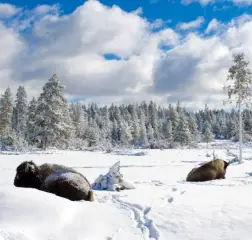
Bison are the most symbolic animal of the American West. The population almost disappeared entirely. Only a couple dozen survived within Yellowstone's boundaries in 1902. Today the herd is healthy. Hunting opportunities remain extremely limited, almost entirely dependent on bison migrating out of the park's northern and western boundaries during winter.
Other Species Worth Knowing
Pronghorn antelope roam the open sagebrush surrounding the ecosystem. Fastest land animal in North America. Classic spot-and-stalk hunting.
Moose (the Shiras subspecies) are the largest member of the deer family. Tags are rare. Often once-in-a-lifetime draws.
Bighorn sheep and mountain goat represent the pinnacle of North American hunting. Pursuit happens in the highest, most precipitous terrain. Tags among the most difficult to draw anywhere in the world.
Gray wolves have re-established healthy populations. All three states allow hunting with tags often available over the counter.
Upland birds and waterfowl offer different experiences for families. Sage grouse, blue grouse, partridge, plus ducks and geese along the region's rivers and wetlands.
The Yellowstone Bison Hunt (What People Get Wrong)
The Yellowstone bison hunt confuses a lot of people. This isn't typical backcountry hunting. It happens mainly along the park's northern boundary near Gardiner, Montana, when harsh winter weather pushes bison to lower elevations looking for food. Hunters position near roads and wait for animals to cross from park into national forest.
Two things are happening here. First, it's population management for a herd that has grown large enough to affect the landscape and create conflicts with nearby ranches. Second (and this matters more) it's an exercise of treaty rights for Native American tribes. The bison is culturally and spiritually essential to these communities.
Most bison harvested each year are taken by tribal hunters reconnecting with traditions that were stripped away over a century ago. The optics can feel strange to outsiders. But this hunt sits at the intersection of modern wildlife management, food sovereignty, and the cultural heritage of the region's First Peoples.

Guided vs. DIY: What Makes Sense for Your Family
Western hunting offers two basic paths. High-investment trips with high success rates, or challenging public land adventures where the experience is the main reward. For families, especially those new to western hunting, the ideal usually borrows from both.
Why Families Should Consider a Guide
Hiring a professional outfitter isn't a shortcut. It's the most reliable way to ensure your family has a safe, educational, memorable hunt where a harvest becomes a wonderful bonus to an already incredible trip.
Safety comes first. An experienced guide is your best asset in grizzly country. They understand bear behavior, know how to avoid dangerous situations, and prepare for emergencies. They keep your family safe on rugged terrain whether you're on foot or horseback.
Learning happens naturally. A guided hunt teaches woodsmanship hands-on. Your family picks up tracking, animal behavior, wind patterns, and GYE ecology from people who live this every season. Real science and ethics education that brings the wild to life.
Access opens up. Outfitters hold permits for productive wilderness areas and often have exclusive leases on private ranches that serve as wildlife magnets. You reach land DIY hunters simply cannot access.
Logistics disappear. Guides handle camp setup, cooking, packing out harvested animals. You focus on the experience and time together.
Two Guided Hunt Styles
Lodge and ranch hunts are the most comfortable option for families. Stay in warm lodges or private cabins with chef-prepared meals. Head out daily with your guide in 4x4 vehicles before hunting on foot. Come back to hot showers and real beds. Often based on private ranches bordering public land.
Recommended outfitters still operating and booking for 2026: Hubbard's Yellowstone Outfitters, Triangle X Ranch, Teton Horseback Adventures. Note that top-tier GYE outfitters are already at about 75% capacity for the 2026 season. Booking 12 to 18 months out has become standard.
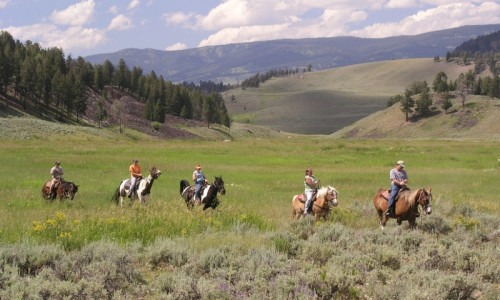
Backcountry pack trips put you deep in wilderness on horseback with mules carrying gear. Wall tent camps with a cook and wood stove. More rustic but incredibly immersive. Unforgettable for families with older, adventurous kids who can handle the demands.
The DIY Reality Check
Do-it-yourself public land hunting in the GYE is one of the greatest challenges in North American hunting. Set realistic expectations: success rates for non-resident DIY elk hunters average 10 to 15 percent. First-timers in unfamiliar areas might see 5 percent or lower.
This path works for people who find immense satisfaction in the process itself. Adventure as the primary reward.
Physical prep matters most. The GYE sits at 7,000 to 10,000+ feet with steep, punishing terrain. Train for months. Focus on cardiovascular endurance and leg strength for thin air and relentless climbs.
Scout before you arrive. Your hunt starts months early. Use mapping tools like onX to study satellite imagery. Find access points, water sources, potential feeding areas, secluded basins away from roads and trails.
Go where others won't. Most hunting pressure clusters within a mile or two of trailheads. To find animals, hike further, climb higher, explore overlooked pockets that others walk past.
Learn migration patterns. Late-season success depends entirely on being in the right place when weather pushes animals down. Study historical routes. Be ready to move.
Weather Changes Everything
For DIY hunters planning mid to late-season rifle hunts, the forecast becomes your most important variable. A week of warm, sunny weather sounds pleasant but often means terrible hunting. Elk stay high in remote sanctuaries when conditions stay nice.
What you actually want? A big, nasty snowstorm. Miserable camping, difficult hiking, and herds moving from high country down into more accessible ranges. Hunters ready to endure cold, wind, and snow put themselves in position to intercept migrating animals.
What a Family Guided Hunt Actually Looks Like
Here's a realistic day-by-day breakdown of a 7-day lodge-based elk hunt. This is roughly what families booking with reputable GYE outfitters can expect.
Day 1: Arrival and Orientation
Fly into Jackson Hole or Bozeman. Outfitter shuttle picks you up. Arrive at the lodge by late afternoon. Meet your guide over dinner. Review hunt plan, sight in rifles, go over safety protocols (especially bear procedures). Early to bed. You're waking up before dawn tomorrow.
Day 2: First Hunt Day
4:30 AM wake-up call. Quick breakfast. Load into trucks while it's still dark. Drive to glassing point as sun rises. Spend morning scanning meadows and timber edges for elk. If nothing spotted, relocate after lunch. Afternoon hunt until last light. Return to lodge exhausted but buzzing. Hot dinner. Crash by 9 PM.
Day 3: Adjusting to Elevation
Similar schedule but your body is feeling the altitude now. Guide reads conditions and adjusts strategy. Maybe push into a different drainage. Kids learning to spot animals, read sign, stay quiet. Long stretches of patience punctuated by bursts of excitement when something moves. This is the rhythm.
Day 4: Mid-Hunt Adjustment
By now your guide has a read on elk movement patterns this week. Hunt plan tightens. You're covering less ground but in better spots. If you're lucky, today brings a shot opportunity. If not, that's hunting. Either way, you're deep in country most people never see.
Day 5: The Grind
Legs are tired. Enthusiasm is tested. This is where character builds. Guide keeps spirits up with stories, points out details you'd miss on your own. A moose in the willows. Fresh bear tracks. The smell of sage after rain. These moments matter even without a harvest.
Day 6: Last Full Hunt Day
Maximum effort. Leave earlier, stay later. Cover ground you haven't touched yet. Pressure creates opportunities or it doesn't. Your family has spent a week working together toward a shared goal in wild country. That's already a success regardless of what happens.
Day 7: Departure
If you harvested an animal, guide handled processing and packing. Meat is boxed for shipping or transport. If not, you leave with memories, lessons, and probably plans to come back. Shuttle to airport. Fly home different than you arrived.
What This Costs (Realistic Budget)
| Expense | Range |
|---|---|
| Guided hunt (5-7 days, 2 hunters) | $7,000 - $12,000 |
| Additional hunter | $3,000 - $5,000 |
| Non-hunting family member | $1,500 - $2,500 |
| Licenses and tags (per hunter) | $700 - $1,200 |
| Flights (family of 4) | $1,500 - $3,000 |
| Tips for guide and staff | $500 - $1,500 |
| Meat processing and shipping | $300 - $800 |
| Total for family of 4 (2 hunters) | $12,000 - $22,000 |
This is a significant investment. But compare it to a week at Disney with park passes, hotels, and food. The price range isn't that different. What you get back is.
Safety and Ethics in Grizzly Country
Hunting here carries real responsibility. You're a guest in wild country. Your actions reflect on the entire hunting community.
Chronic Wasting Disease: Mandatory Knowledge
CWD is a fatal neurological disease affecting deer, elk, and moose. It has been detected in the GYE. State agencies have strict rules for monitoring and preventing spread.
What it does: CWD attacks the brain and nervous system. Always fatal. No cure exists.
What you must do: In many hunt areas, testing is mandatory. You're legally required to submit the animal's head at a check station or drop-off location.
Transport rules: You generally cannot move brain or spinal tissue out of designated CWD Management Zones. Check regulations for your specific unit before traveling. Violations carry steep fines and can cost you your license.
Bear Safety Is Not Negotiable
The GYE has the densest grizzly population in the lower 48. Encounters remain unlikely but possible. Preparation isn't optional.
Carry bear spray and know how to use it. Keep it on your hip or chest harness, not buried in your pack. Practice deploying it before your trip.
Make noise while moving. Talk, clap, sing in thick brush or near loud water. Don't surprise a bear at close range.
Stay alert around carcasses. Extra caution when approaching downed animals. A bear may have already claimed it.
Follow food storage rules at camp. All food, garbage, and scented items go in certified bear-resistant containers or hang properly (10 feet off ground, 4 feet from trunk).
Your family's safety depends on taking this seriously.
11,000 Years of Hunting History
Long before steel and gunpowder, the most valuable resource for hunters here was stone. Volcanic glass from Obsidian Cliff served as the armory of the Rockies for over 11,000 years.
Native peoples traveled hundreds of miles, sometimes thousands, to quarry this material. They used elk antler tools to extract prized obsidian nodules and knapped them into razor-sharp spear points, knives, and arrowheads.
The chemical signature of Yellowstone obsidian is unique. Archaeologists have traced tools from Obsidian Cliff as far as the Great Plains and Ohio River Valley. Evidence of extensive trade networks spanning the continent.
Archaeological sites around Yellowstone Lake show occupation for over 9,500 years. Tools reveal traces of hunted bighorn sheep and rabbit from these ancient camps.
When you hunt here, you walk where countless generations relied on this land for survival. This isn't untouched wilderness. It's country with 11,000 years of continuous human history. Understanding that adds weight to any modern hunt.
Questions Families Actually Ask
Can I hunt inside Yellowstone National Park?
No. Public hunting is strictly prohibited within park boundaries. All hunting occurs in surrounding national forests and on private lands in Montana, Wyoming, and Idaho.
Do I need a guide to hunt near Yellowstone?
In Wyoming, non-residents must hire a licensed guide for any federally designated Wilderness Area. That covers most prime hunting territory. In Montana and Idaho, guides aren't legally required for most public land. But for safety, success, and navigating regulations, guides make sense for out-of-state families.
What are realistic success rates?
Varies wildly by hunt type. Quality guided hunts often see success rates above 50%, sometimes approaching 90%. DIY public land hunts average 10 to 15% for non-residents. First-timers in new areas might see 5% or less.
Is it safe to bring my family into grizzly country?
Yes, with the right preparation and expertise. Guided hunts are safest. Professional outfitters know bear behavior and safety protocols inside out. For any GYE backcountry trip, strict adherence to bear safety rules is essential.
What is the Yellowstone bison hunt exactly?
A limited, highly-regulated hunt on national forest land just outside the park's northern and western boundaries. Happens when bison migrate out during winter. Serves as population management and is an important exercise of treaty rights for several Native American tribes who account for most of the harvest.
When's the best time to hunt?
Depends on your target species and weapon. Archery elk season in September often coincides with rut when bulls are bugling and responsive to calls. Rifle seasons run October through November, overlapping major migrations triggered by winter weather.
How much does this actually cost?
DIY public land hunts run $3,000 to $5,000 including tags, travel, gear, and food. Guided lodge-based hunts range from $7,000 to $12,000 for a single hunter. Premium backcountry pack trips start at $10,000 and climb past $15,000. Add licenses, flights, and tips for total family costs of $12,000 to $22,000 or more.
What if we don't harvest anything?
Most families don't fill tags, especially on first trips. The experience, education, and time together in wild country is the real return on investment. If you need a guaranteed harvest to feel satisfied, recalibrate expectations before booking.
Can my kids hunt?
Yes, with appropriate licenses and hunter education completion. Wyoming allows youth to apply for tags at age 11 (if turning 12 that calendar year). All three states offer youth hunting opportunities. Guided hunts can accommodate young hunters with adjusted expectations for physical demands.
Ready to Start Planning?
A hunt in the Greater Yellowstone Ecosystem is more than a family vacation. It's a chance to step into landscape that has sustained human and animal life for millennia. To participate in the grand drama of the seasons. To contribute to conservation of America's most iconic wildlife.
Whether you choose the comfort and expertise of a lodge-based guided trip or the rugged self-reliance of a backcountry DIY adventure, the GYE offers rare opportunity. Forge deeper connections with the wild, with shared heritage, and with each other.
Start now. Application deadlines begin in January. The best outfitters and prime units book 12 to 18 months ahead.
Your Planning Timeline
18 months out:
- Research outfitters and request information
- Book guided hunt dates (prime weeks fill fast)
- Begin preference point accumulation if targeting competitive units
12 months out:
- Finalize outfitter selection and pay deposits
- Plan application strategy across states
- Start physical training program
6 months out:
- Submit all license applications (January through June depending on state)
- Book flights once tags are confirmed
- Intensify fitness training
3 months out:
- Confirm all bookings with outfitter
- Finalize gear list and fill gaps
- Practice shooting at realistic distances
1 month out:
- Final gear check
- Review hunt plan and safety protocols
- Study maps of your hunting area
1 week out:
- Pack carefully using outfitter's checklist
- Confirm travel arrangements
- Rest and hydrate
The stories you bring home will last longer than any trophy on the wall.