Fort Yellowstone: Where Cavalry Soldiers Saved Yellowstone

Fort Yellowstone: Where Cavalry Soldiers Saved Yellowstone
You've probably driven past Fort Yellowstone a dozen times on your way to Old Faithful and never stopped. That's a mistake.
This isn't just another cluster of historic buildings with plaques you'll skip reading. Fort Yellowstone is where the entire concept of protecting national parks was invented, tested, and nearly abandoned before U.S. Cavalry soldiers showed up on horseback to save it.
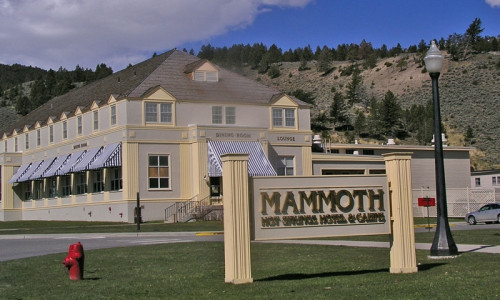
The fort sits right in Mammoth Hot Springs, five miles from the North Entrance, and here's the thing: it's open year-round, which means you can visit when half of Yellowstone is buried under snow and closed to cars. Walk the same parade grounds where soldiers drilled in the 1890s. Watch elk graze 20 feet from buildings that housed the men who wrote the first rules for managing a national park. Let your kids explore a visitor center that used to be officer quarters.
It's living history that doesn't feel like a dusty museum, and it takes about two hours to see the whole thing properly.
Key Takeaways
- Fort Yellowstone was built between 1891-1913 after the U.S. Army took over management of Yellowstone when civilian control failed spectacularly
- The Albright Visitor Center (formerly Bachelor Officers' Quarters) has free wifi, clean bathrooms, and a wildlife museum upstairs that works for kids 8 and up
- Most buildings aren't open to tour inside, but the self-guided walking tour of the grounds is free and the architecture alone is worth seeing
- The North Entrance stays open to cars all winter, making this one of the few historic sites in Yellowstone you can visit in January
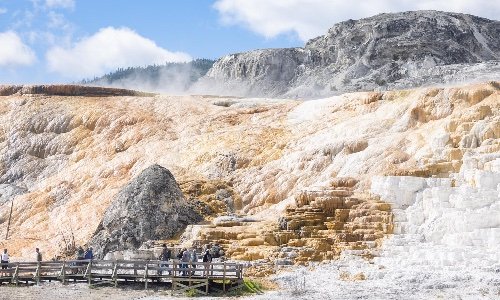
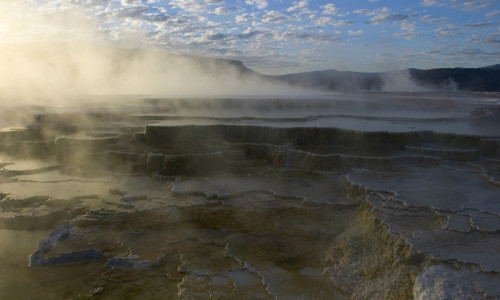
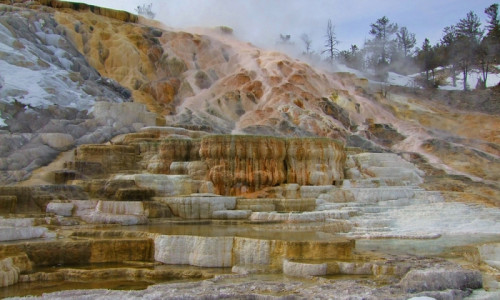
- Plan 2 hours minimum if you want to see the visitor center and walk the grounds, 3 hours if you're adding a ranger tour or hitting the hot springs terraces next door
Start at the Albright Visitor Center
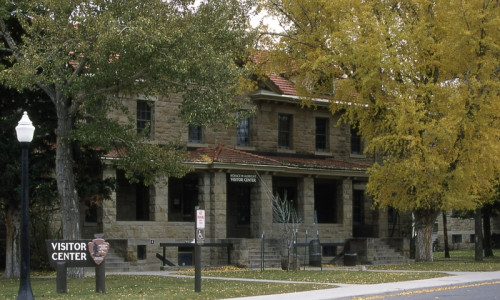
The stone building with the flagpole is your first stop. Before it housed park rangers and a gift shop, this was where unmarried cavalry officers lived in 1909. You're literally standing in their quarters.
Inside you'll find the standard visitor center setup on the main floor: helpful rangers at a desk, trail maps, road condition updates, and a bookstore run by Yellowstone Forever. The upstairs wildlife museum is where things get interesting for families. The exhibits focus on predator-prey relationships with taxidermy that ranges from impressive to slightly unsettling depending on your kid's age. If your children are under 7, they might find the grizzly bear display intense. Ages 8 and up usually love it.
Practical stuff you need to know: the bathrooms here are clean and never have a line like the ones at Old Faithful. Free wifi actually works if you need to download a trail map or check the weather. The backcountry office is tucked in here too if you need fishing permits or camping reservations, though most families visiting Fort Yellowstone won't need that.
One more thing: talk to the rangers before you leave. Ask what time the elk usually show up on the parade grounds (it varies by season), whether any ranger programs are running that day, and which trails are currently a muddy mess from recent rain. They know, and they'll tell you straight.
Walking the Historic Fort Yellowstone Grounds
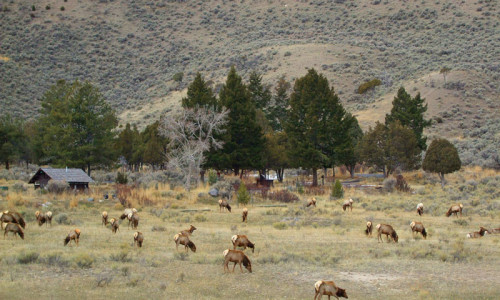
Grab a self-guiding map at the visitor center and step outside. That big open lawn in the center is the Parade Ground where cavalry troops trained every morning and held formal ceremonies. Now it's where elk graze like they own the place, which they basically do.
The buildings around you aren't replicas. These are the actual structures built by Scottish stonemasons between 1891 and 1913 using sandstone quarried between the Gardner River and what's now the campground. The red roofs are Fort Yellowstone's signature look.
Here's what you're looking at as you walk:
Albright Visitor Center - Bachelor Officers' Quarters (1909), now the main visitor hub with museum and bookstore
Administration Building - Double Cavalry Barracks (1909), now serves as Yellowstone National Park Headquarters
Officers' Row Houses - Duplex quarters built in 1891, 1897, and 1909, currently housing for NPS employees (not open to public)
Post Chapel - Built in 1913, still used for non-denominational services and occasionally open
Old Stables - Where the cavalry kept their horses in 1897, now vehicle maintenance and more employee housing
Guardhouse - Two different ones actually, built in 1891 and 1911, where soldiers who broke rules spent time locked up (not open to public)
Most buildings serve as working park offices or employee housing, which means you're viewing them from outside only. That's fine. The architecture and the setting tell the story.
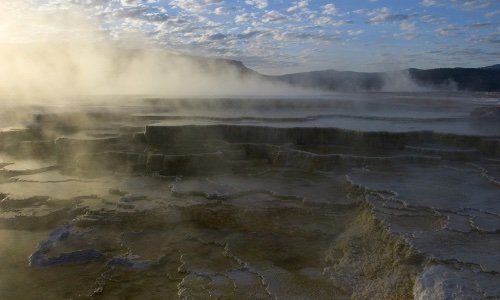
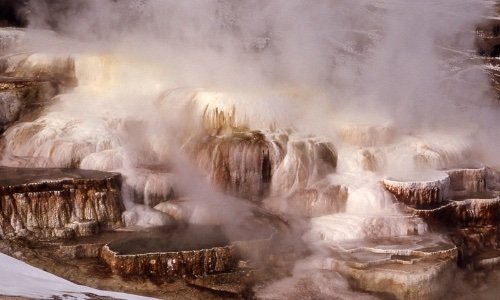
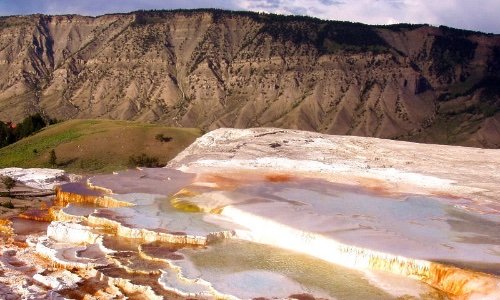
The ground under your feet is slightly unusual, by the way. In 1902, an officer reported that the parade ground had "several holes in it, revealing deep, unexplored caverns beneath." They were building on travertine deposits over old hot spring formations. The Army eventually stabilized it with topsoil and grass, but you're walking on a thin crust above geothermal activity. Very Yellowstone.
Curious? FAQ & More Information
1. How long should we spend at Fort Yellowstone?
Two hours covers the visitor center and a self-guided walk of the grounds at a comfortable pace with kids. Add another hour if you're joining a ranger tour or want to read every interpretive sign. If you're combining this with the Mammoth Hot Springs Terraces next door, plan three hours total.