Mud Pots
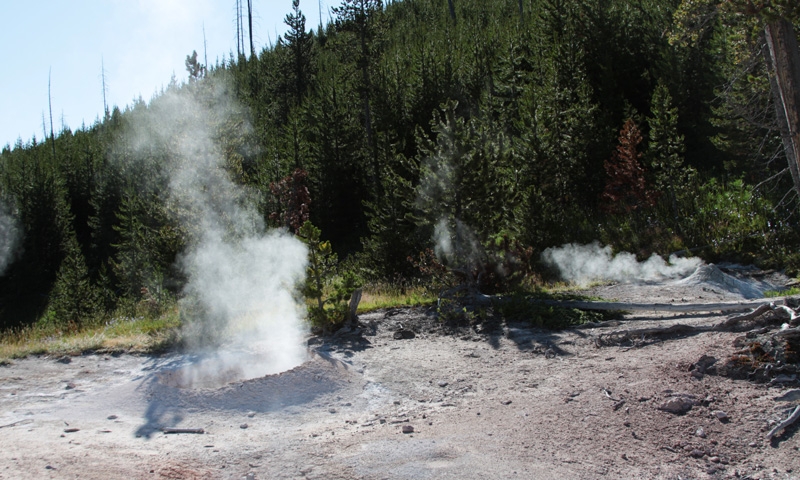
The more popular geysers often overshadow the mud pots. These natural wonders should not be missed. Although the mud pots are not as picturesque as the hot springs and pools, these turbulent pools of hot, muddy water, and bizarre landscapes are another feature that makes Yellowstone National Park so unique. As you experience the mud pots and volcanoes, be aware that you are close to one of the major vents from which lava flowed through the caldera's collapse. These areas are active and known as resurging domes. They are being monitored closely for information about future volcanic activity. As you experience the mud pots, you are certain to smell a distinct odor. The presence of sulfur in mud pots separates them from Hot Springs. In the form of hydrogen sulfide gas, sulfur is what creates the infamous odor.
Mud Features
Dragon's Mouth Spring - The surging activity of this spring is what has given its name. The temperature remains around 180° F. Dragon's Mouth surging action has decreased since December 1994.
Mud Volcano - Early explorers to Yellowstone describe this feature as the most repulsive terrifying sight. This volcano like cone was 30 ft wide and 30 ft tall, with mud erupting to cover tall trees. The mud Volcano still has its violent moments.
Sour Lake - Sour lake is named for its acidic water. This lake's greenish cast is due to bacterial an algae in the water.
Churning Caldron - Another example of the constant metamorphosis of the land in Yellowstone, Charring Caldron's temperature drastically changed due to an earthquake in 199. The average temperature before the earthquake was 100° F. After the quake, the temperature jumped to 145° F. This increase in temperature killed many of the microorganisms that once lived within the caldron. The temperature has since decreased to 120° F.
Mud Geyser - Mud geyser is currently dormant due to a new feature which arose in 1993. This feature is a series of steam vents and shallow superheated pools sizzling at temperatures up to 196° F. When Mud Geyser was active, a column of muddy water, 7-10 ft in diameter, erupted up to 50 ft in the air. Mud Geyser may erupt again one day.
Mud Caldron - The boiling action you see is not actual boiling water. This action is caused by carbon dioxide and other gases rising from below and passing though the water in the pool.


network of Travel Guides