

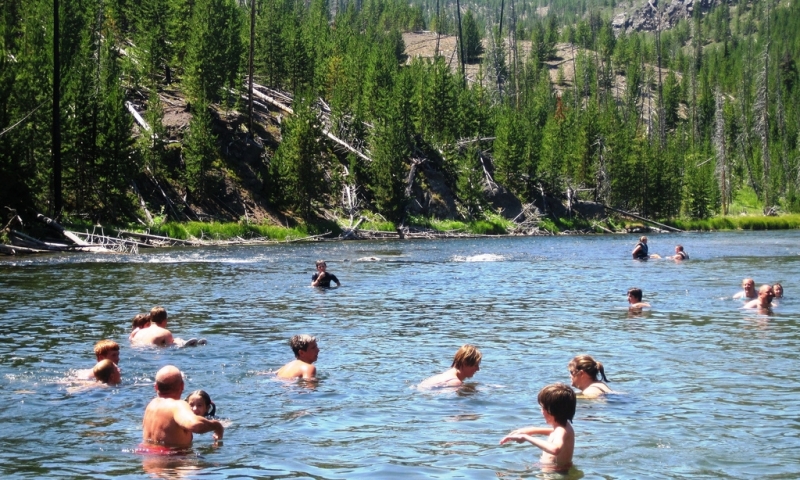


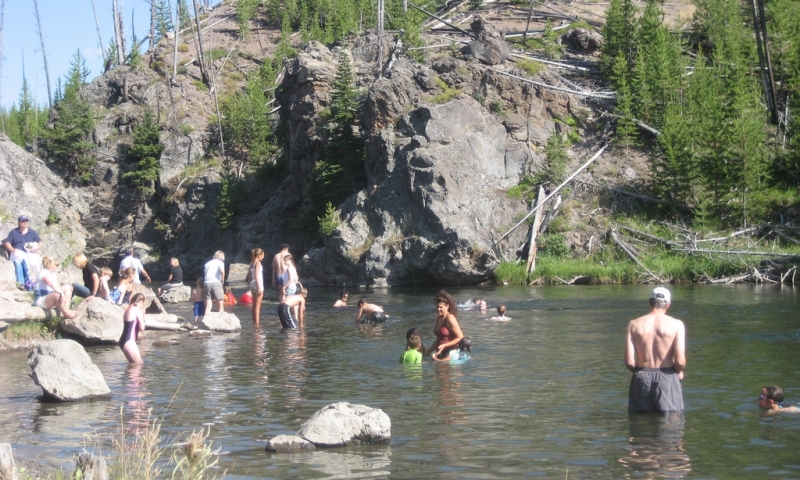




- Go for a warm swim in the Firehole River near Madison Junction
- Soak in the hot waters around Corwin Springs at Yellowstone Hot Springs, or in Pray MT at Chico Hot Springs
Where can I enjoy soaking in Yellowstone hot springs?
The hot springs within Yellowstone are far too hot to enjoy. Even a dip of a tow could result in serious burns. Please pay attention to signage and do not touch the scalding waters of Yellowstone. There are a few places where hot waters flow into cool rivers, making a warm area to swim and soak.
- Firehole River: From the Madison Junction, follow the one-way Firehole Canyon Drive to the Firehole River swimming area. You can park right along the road (although parking spaces fill up quickly in the summer) and walk down a set of stairs to the waters edge. The warm waters in this section of the river are fed by a nearby hot spring and make for a wonderful place to soak. Kids will love it too. The swimming area closes on occasion depending on water levels.
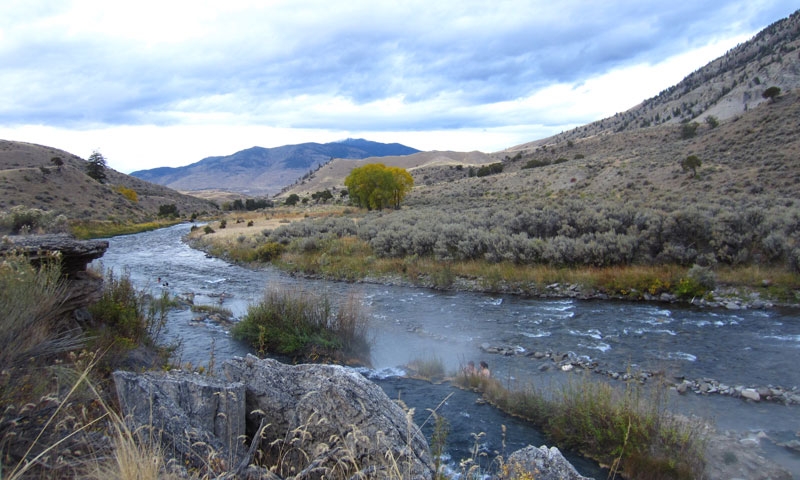
- Boiling River: Near Mammoth Hot Springs. This was open to the public until the flood year of 2022 at which time the road to the location was washed away. (Currently closed to public access)
Other Nearby Hot Springs
Outside of the park's boundaries you will find a few developed hot springs that are great for soaking.
- Chico Hot Springs: Located between Mammoth Hot Springs and Livingston, Chico Hot Springs is a resort, complete with hotel rooms, cabins, a find dining restaurant, and a developed hot spring pool. Day passes are available.
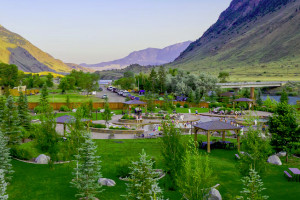
- Yellowstone Hot Springs - located 10 minutes north of Gardiner, along US Hwy 89 at Corwin Springs bridge, this resort saw its first pools built around 1909 but were modernized into today's gorgeous new facility in 2018.
- Norris Hot Springs: Located southwest of Bozeman and north of Ennis, Montana, Norris Hot Springs offers an outdoor pool with a wooden bottom. Local musicians play in the music tent every weekend night.