


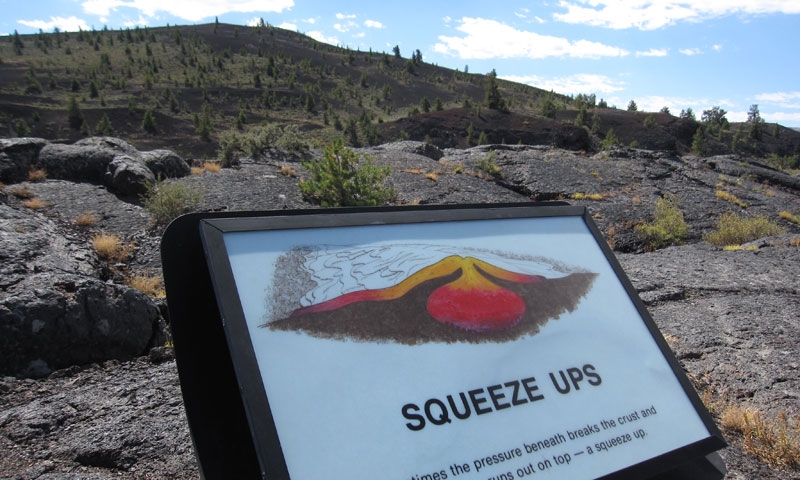
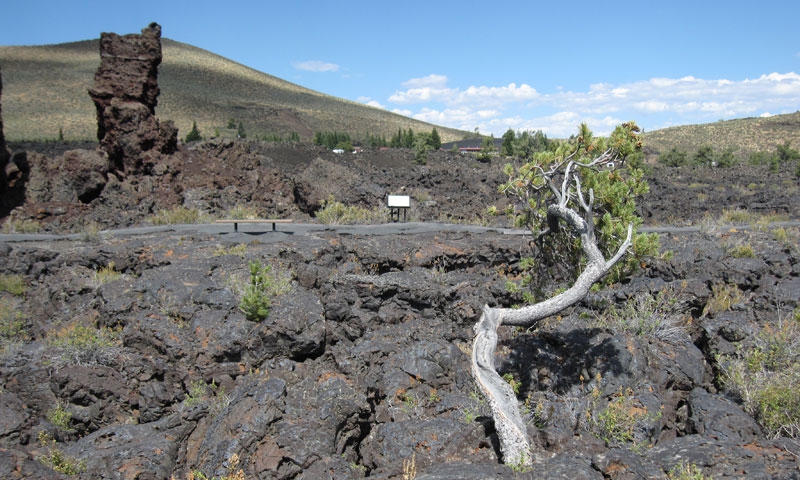
- View the Craters of the Moon National Monument’s incredible volcanic features.
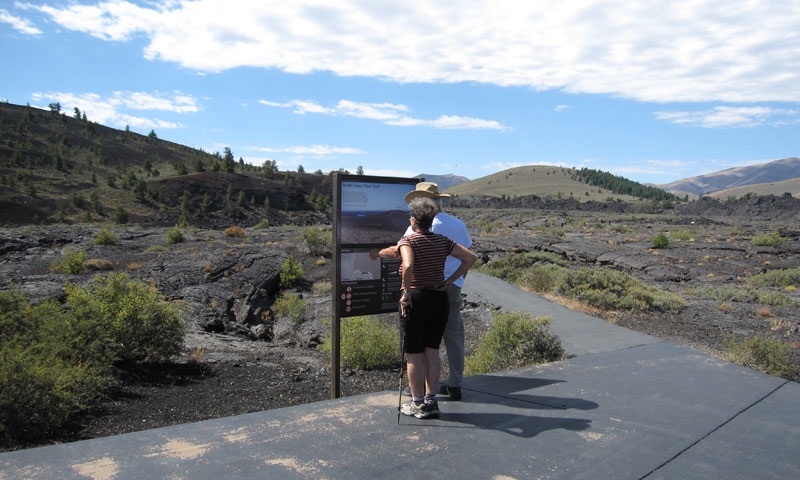
- Take a short hike along the wilderness trail to see the sights up close.
- Explore the dark lava tubes as you descend underground for a breathtaking experience.
- Only 213 miles from Yellowstone, or a drive of about 4 hours.
Overview
Craters of the Moon National Monument is a national monument and preserve in central Idaho. The fascinating volcanic features are well preserved within three major lava fields.
Seasons
Craters of the Moon is open all year, but from the middle of November to the middle of April, snow prevents cars from traveling the Loop Road.
Fees
Entrance fees are $8 for a vehicle, $4 for those entering by bicycle, motorcycle or foot. Individuals 15 and under are free. There is no fee in the winter when Loop Drive is closed.
Lava Flow Campground is open from May through October and fee is $10 per site in the summer.
More Info
Loop Road is a seven-mile scenic road where you can explore Craters of the Moon. It takes about 30 minutes to make the whole trip.
The wilderness trail is great for day hikes. It’s inaccessible for about one third of the year, but summer will allow you to attain parts of the area most never see.
The caves area is wonderful to visit, with dark lava tubes taking you below ground into a strange new world.
Check out the Visitor Center with its exhibits, films and other facilities.
Getting Here
To reach Yellowstone from Craters of the Moon, begin in Arco, Idaho, taking US 20 to US 26. Go left when you reach Idaho 31, following that to Idaho 33 and to Wyoming 22. US 26 will then take you right to Yellowstone.