Tower-Roosevelt Visitor's Center
Tower Roosevelt is the most relaxed environment of the Yellowstone National Park's villages. It offers a great place to take a break from the more crowded attractions in Yellowstone National Park. The location is a bit out of the way, but its well worth the journey. Tower Roosevelt is 23 miles from Gardiner, Montana - the North Entrance, and 29 miles from Cooke City - the Northeast Entrance.
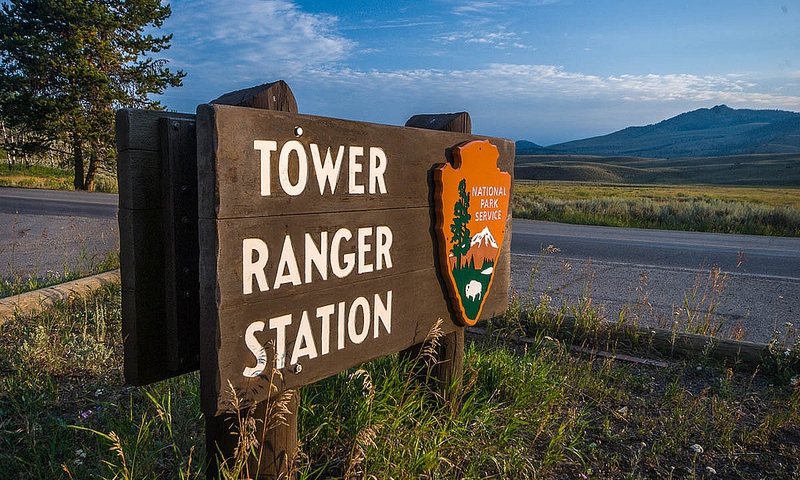
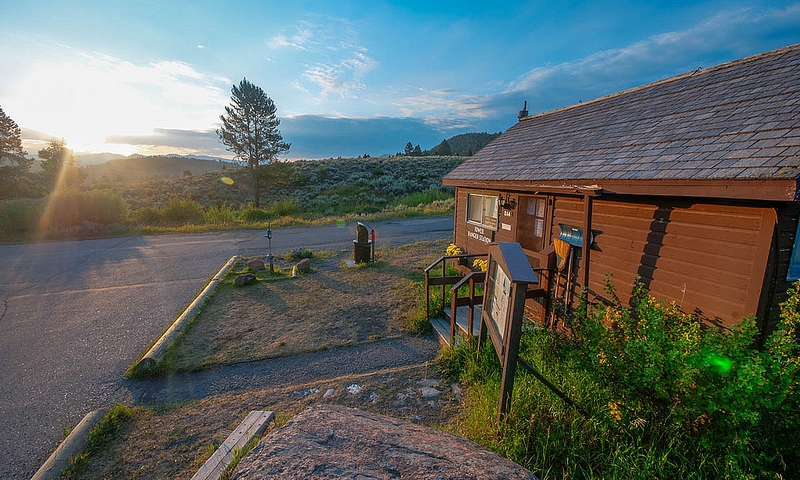
With its laid back feel and its rustic charm, Tower Roosevelt sheds some light to the old days of Yellowstone. Tower Roosevelt is home to the Tower Soldier Station, one of the three surviving outposts from the era of United States Cavalry management of the park. Today, the outposts serves as the ranger residence at Tower Junction. Also, President Theodore Roosevelt is commemorated for his camping excursions to this area of the park in 1903. The rustic building, Roosevelt Lodge was named in his honor and now serves as a dining hall, bar, and registration area for visitors staying at nearby frontier cabins. This low-key operation with primitive cabins is considered the park's family hideaway.
The lodge is a rugged but charming stone edifice with a long, deep porch outfitted with rockers so guests can converse with each other, nature, or the squirrels that scurry about. Inside, you will find a registration desk, a dining area with a massive fireplace, and a lounge, also festooned with a fireplace and furnished with overstuffed furniture and a player piano. You can get into the cowboy spirit by taking a guided trail ride, a stagecoach ride, or a wagon ride. A more adventurous alternative to the rather rustic dining room atmosphere at Roosevelt Lodge is an Old West cookout to which you will arrive by either horseback or wagon for a hearty meal.
Not only is the lodge well connected to hiking trails, but is also a gateway to the corridor of the Lamar Valley and Lamar River, one of the lesser traveled areas of the park and one of the most beautiful valleys in the park. This valley has been covered by glaciers three times, most recently during an ice age that began 25,000 years ago and continued for 10,000 years. Remnants of the glacial period are seen today in the dotted glacial ponds and boulders strewn about the valley, deposited in random locations by the moving ice. This beautiful valley is often referred to as "Roosevelt Country" because of the fond attachment Theodore Roosevelt had to the Lamar Valley. The land is active with elk, bison, bear and wolves, and their interaction in the wildlands is often viewed by those visiting.
The closest visitor center to Tower Roosevelt happens to be the largest of the eight visitor centers in the park. Albright Visitor Center, near park headquarters in Mammoth, is only 20 miles from Tower-Roosevelt. This visitor center has more visitor information and publication than any other center in the park, featuring significant exhibits telling the story of the park from prehistory through the creation of the National Park Service. It is open from 8am to 8pm during peak season and is open year round.
Enclosed in floor-to-ceiling glass cases are uniforms, furniture, sidearms, and memorabilia that reflect the park's varied history. There are excellent photography exhibits, much of it by the first park photographer, William Henry Jackson which are beautiful and offer such rich history for our first nation's and world's park. The second level of the visitor center is filled with displays of the wildlife that inhabits the park, including wolves, mountain lions, waterfowl, and other birds. The Challenge of Yellowstone, a film addressing the concept of the national park, is shown throughout the day. Spending some time at the Albright Visitor Center is time well spent, with a wealth of information of our most precious protected treasure, Yellowstone National Park.


network of Travel Guides