Yellowstone Vacations courtesy of Flying Pig Adv's - The friendliest, most professional travel planning company you'll experience for families seeking adventure in the region. We work with the best outfitters, lodging organizations, guides and information resources to help you enjoy your trip to Yellowstone. Online booking or by phone, come see us!
Yellowstone National Park

Yellowstone National Park: Tower-Roosevelt

Tower-Roosevelt Area

map button weather yellow pages print

NATURAL HIGHLIGHTS OF TOWER-ROOSEVELT REGION

Specimen Ridge

Specimen Ridge, located along the Northeast Entrance Road east of Tower Junction, contains the largest concentration of petrified trees in the world. There are also excellent samples of petrified leaf impressions, conifer needles, and microscopic pollen from numerous species no longer growing in the park. Specimen Ridge provides a superb "window" into the distant past when plant communities and climatic conditions were much different than today

Petrified Tree

The Petrified Tree, located near the Lost Lake trailhead, is an excellent example of an ancient redwood, similar to many found on Specimen Ridge, that is easily accessible to park visitors. The interpretive message here also applies to those trees found on Specimen Ridge.

Tower Fall

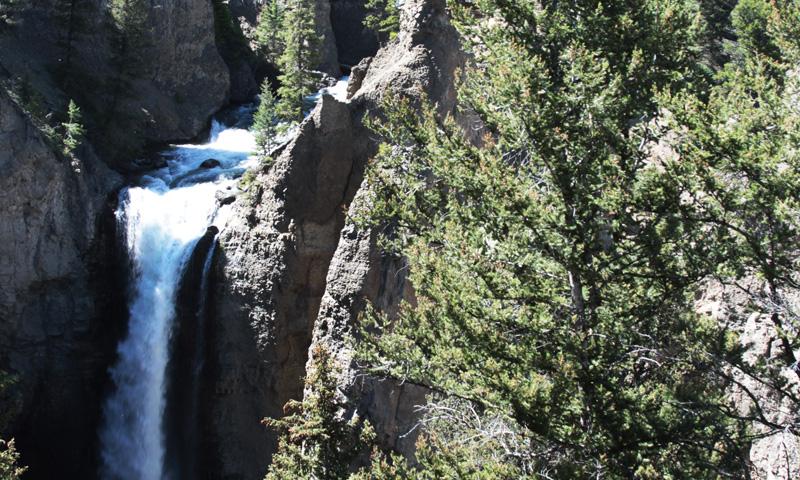
Tower Fall is the most recognizable natural feature in the district. The 132-foot drop of Tower Creek, framed by eroded volcanic pinnacles has been documented by park visitors from the earliest trips of Europeans into the Yellowstone region. Its idyllic setting has inspired numerous artists, including Thomas Moran. His painting of Tower Fall played a crucial role in the establishment of Yellowstone National Park in 1872. The nearby Bannock Ford on the Yellowstone River was an important travel route for early Native Americans as well as for early European visitors and miners up to the late 19th century.

Calcite Springs

This grouping of thermal springs along the Yellowstone River signals the downstream end of the Grand Canyon of the Yellowstone. The geothermally altered rhyolite inspired the artist Moran; his paintings of this scene were among those presented to Congress in 1872, leading to the establishment of the park. The steep, columnar basalt cliffs on the opposite side of the river from the overlook are remnants of an ancient lava flow, providing a window into the past volcanic forces that shaped much of the Yellowstone landscape. The gorge and cliffs provide habitat for numerous wildlife species including bighorn sheep, red-tailed hawks, and osprey.

GEOLOGY OF THE TOWER-ROOSEVELT AREA

The geology of the Tower district is incredibly varied. Major landforms are expressions of geologic events that helped shape much of the Yellowstone area. Absaroka volcanics, glaciation, and erosion have left features as varied as Specimen Ridge's petrified trees to the gorges along the Yellowstone River's Black Canyon and the Grand Canyon of the Yellowstone.

Mt. Washburn and the Absaroka Range are both remnants of ancient volcanic events that formed the highest peaks in the Tower District. Ancient eruptions, perhaps 45 to 50 million years ago, buried the forests of Specimen Ridge in ash and debris flows. The columnar basalt formations near Tower Fall, the volcanic breccias of the "towers" themselves, and numerous igneous outcrops all reflect the district's volcanic history.

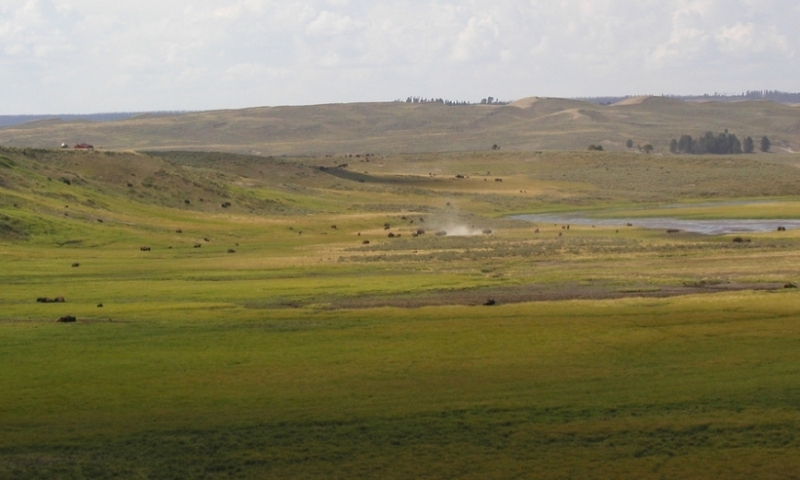
Later, glacial events scoured the landscape, exposing the stone forests and leaving evidence of their passage throughout the district. The glacial ponds and huge boulders (erratics) between the Lamar and Yellowstone rivers are remnants left by the retreating glaciers. Lateral and terminal moraines are common in these areas. Such evidence can also be found in the Hellroaring and Slough creek drainages, on Blacktail Plateau, and in the Lamar Valley.

The eroding power of running water has been at work in the district for many millions of years. The pinnacles of Tower Fall, the exposed rainbow colors of the Grand Canyon of the Yellowstone at Calcite Springs, and the fearsome gorge of the Black Canyon all are due, at least in part, to the forces of running water and gravity.

In the Lamar River Canyon lie exposed outcrops of gneiss and schist which are among the oldest rocks known in Yellowstone, perhaps more than two billion years old. Little is known about their origin due to their extreme age. Through time, heat and pressure have altered these rocks from their original state, further obscuring their early history. Only in the Gallatin Range are older outcrops found within the boundaries of the park.

Yellowstone National Park, WY Weather